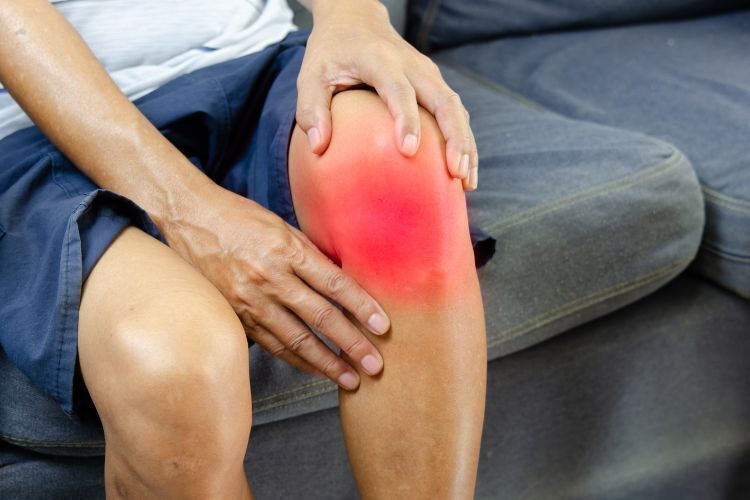
If you've ever felt that dull, aching pain around or behind your kneecap after a run, you already know how disruptive runner's knee can be. It has a way of showing up gradually: a slight twinge on mile three, a little more stiffness climbing stairs the next day, until one day it's affecting every run you try to take. Runner's knee recovery isn't usually about one dramatic fix. It's a process of finding what's actually driving the pain, correcting it, and rebuilding strength the right way. The good news is that most people recover fully once they understand what's happening in the joint and stop treating the symptom instead of the cause.
At Meier Family Chiropractic, we see this condition often, especially among the running community across Urbandale and the greater Des Moines metro. Waukee, Clive, and West Des Moines all have active running groups, and knee pain is one of the most common reasons local runners walk through our door. Here's what we tell patients about why it happens, how long it takes to heal, and what actually helps.
What Is Runner's Knee, Really?
"Runner's knee" is the common name for patellofemoral pain syndrome: pain around the front of the knee where the kneecap glides over the thigh bone. Despite the name, you don't have to be a runner to get it. Cyclists, hikers, and anyone who spends a lot of time going up and down stairs can develop the same pattern.
The pain usually comes from the kneecap tracking slightly off-center as the knee bends and straightens. Over thousands of repetitions, that small misalignment causes irritation in the cartilage and surrounding tissue. Common contributors include weak hip and glute muscles, tight quads or IT bands, and biomechanical issues in the foot or ankle that change how load travels up the leg. Worn-out running shoes, a sudden increase in mileage, and hill training added too quickly are also frequent triggers we hear about from patients.
How Long Does Runner's Knee Recovery Time Actually Take?
This is the question almost every runner asks first, and the honest answer is that it depends on how early you address it. Mild cases caught early often improve within two to four weeks with the right combination of rest, strengthening, and load management. More stubborn cases, especially ones that have been ignored for months while a runner just "pushes through it," can take six to eight weeks or longer to fully resolve.
The biggest factor isn't the severity of the pain on day one. It's whether the underlying mechanical cause gets corrected, or whether you just wait for the pain to fade and go right back to your old running pattern. Pain that keeps returning every few months, sometimes called "recurrent runner's knee," is usually a sign that something upstream (hip stability, foot mechanics, or an old compensation pattern) was never fully addressed the first time around.
Recovery Steps That Actually Work
A good runner's knee recovery plan usually includes a few key pieces, layered together rather than tried one at a time:
- Temporary load reduction: cutting mileage or intensity, not stopping activity entirely
- Hip and glute strengthening: since weak hips are one of the most common drivers of poor kneecap tracking
- Quad and IT band mobility work: to reduce tension pulling on the kneecap
- Gradual return-to-running progression: rebuilding volume slowly instead of jumping back to full training all at once
Runner's knee rehab exercises like clamshells, single-leg bridges, and step-downs are frequently recommended because they target hip stability directly. These movements retrain the muscles that control how your leg absorbs impact, which takes pressure off the kneecap itself. But exercises alone don't always solve the problem if there's an underlying joint restriction or movement compensation feeding the pain, which is exactly where a full evaluation makes the difference between temporary relief and lasting recovery.
Where Chiropractic Care Fits Into the Picture
This is exactly the kind of case our chiropractic care approach is built around. Rather than treating the knee in isolation, Dr. Nick Meier and Dr. Gavin Spennewyn evaluate the full kinetic chain, including the hip, ankle, and spine, to find what's actually driving the kneecap irritation in the first place.
Dr. Meier, a Palmer College of Chiropractic graduate and U.S. Army veteran, practices the Gonstead Method exclusively: a precise, biomechanically-focused adjusting technique that targets the specific joint contributing to the problem rather than making broad, generalized adjustments. Dr. Spennewyn brings additional training from an informal residency under Dr. Richard Hills, PT, DC, FAAOMPT, with a strong background in joint biomechanics and functional rehabilitation.
For runners dealing with recurring knee pain, this combination often reveals something simple but easy to miss on your own: a hip that isn't moving well, a foot that's overloading one side of the knee, or an old injury that quietly changed how you load your stride. Correcting those mechanical issues, alongside targeted strengthening, is often what separates a runner who fully recovers from one who keeps managing the same flare-up every training cycle. We go into more detail on the mechanics of knee pain, including patterns we commonly see in runners, on our knee pain chiropractor page.
Reducing Knee Pain When Running Going Forward
Once the initial pain resolves, prevention becomes the priority. Runners who avoid repeat flare-ups typically build hip strengthening into their weekly routine year-round, not just after an injury flares up. They also increase mileage gradually, avoiding jumps of more than about 10% per week, and replace worn-out shoes before they lose support, usually every 300 to 500 miles.
According to the American Academy of Orthopaedic Surgeons, patellofemoral pain is one of the most common overuse injuries among runners, and most cases respond well to conservative, non-surgical care. The Mayo Clinic similarly notes that addressing muscle imbalances early is one of the most effective ways to prevent recurrence, rather than waiting until pain becomes severe enough to sideline training completely.
Feel Better, Move Freely
Runner's knee recovery doesn't have to mean months on the sidelines. With the right evaluation, a clear understanding of what's driving the pain, and a plan that addresses the whole kinetic chain, not just the knee, most runners get back to full training feeling stronger and more balanced than before. If knee pain has been slowing you down, the team at Meier Family Chiropractic in Urbandale is here to help you find the actual cause and get back to running pain-free. Schedule a visit today and let's get you moving again.

.jpg)
.jpg)
